Friday, 12 January 2018

Sample Blog Post #4: The theory of all theories...

Literary theory is often shied away from as people tend to prefer giving points of view from their own experiences rather than through the lens of someone else's ideas. In light of this, I have found that, in studying Harry Potter and the Prisoner of Azkaban, I too get the feeling that of the three theories being focused on (Reader Response, Archetypal and Feminist Criticism), Reader Response is the one that provides the best analysis. This is really because, as I mentioned before, the book tends to blend and distort the idea of archetypes and even though Hermione is a strong, feminist character, the book still has a lot of patriarchal norms that might not appease the standard feminist.

Reader response allowed me to explore the text from the many sides of myself and to immerse myself into the world of Harry Potter.
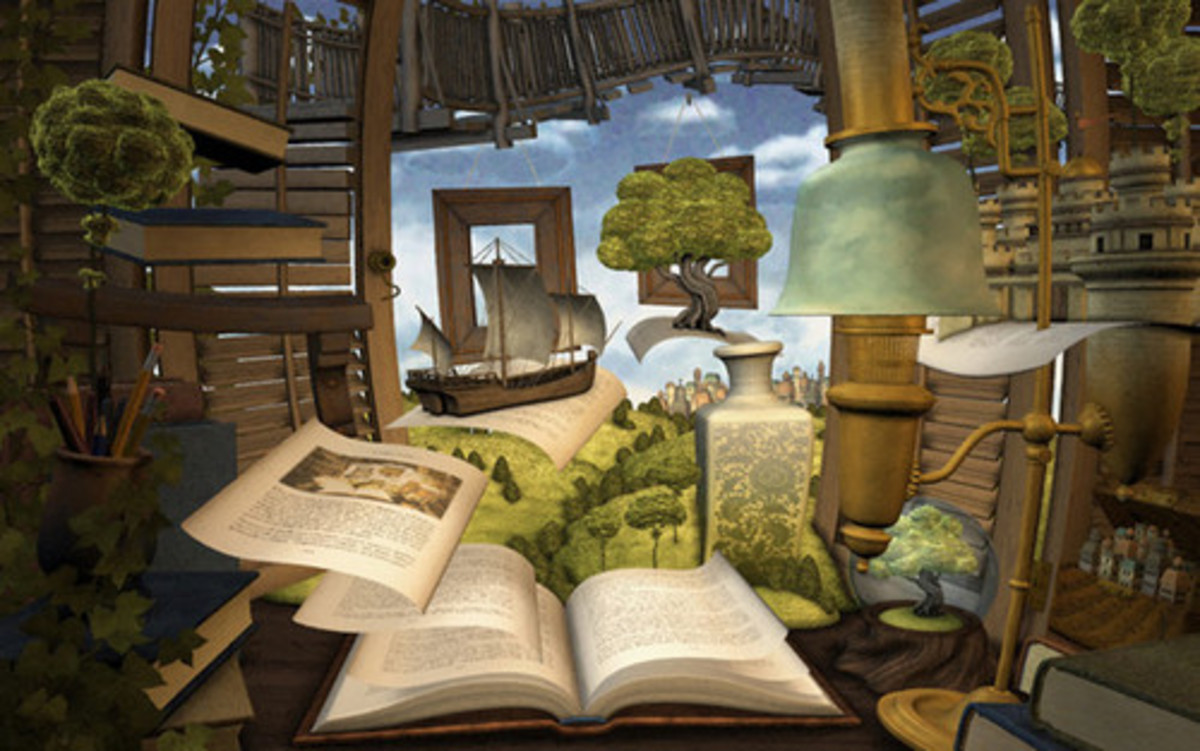
Image result for books imagination
Taken from (https://usercontent2.hubstatic.com/7398569.jpg)

The benefit of Reader Response theory is that it focuses on the reader's interpretations. It doesn't matter what the intent of the author was and it doesn't matter what the context is either. I can see things in the book that no one else can see and my opinions will still be just as valid as if they came from J.K. Rowling herself. On top of that, my interpretation and point of view can vary depending on what I'm reading.

In the first blog post I mentioned that as a teenager, the book resonated with me because of Harry's teenage issues and how similar they were to mine. Even as an adult, I still feel that connection with Harry. Later on in the text, as Harry discovers SPOILER ALERT that Sirius Black is actually his godfather and has finally found the closest thing to family, it awoke the deep (very, very deep. Ok I'm kidding) sappy side of me; the side of me that is a sucker for family and close relationships. Very early in my life, I knew I wanted to get married and have a family of my own. I also am a fiercely territorial friend: the bottom-line is, I value relationships. That yearning that Harry demonstrated throughout the story of needing family, the need to belong, is a yearning I also have and it influences so much of the decisions Harry makes and the overall outcome of the story.

The Reader Response theory allows me to evaluate myself through the text. That's not always the wisest thing, but in finding meaning in Harry's life, I also found meaning in mine. An article I read a while ago mentioned that books like Harry Potter actually teach children empathy and make them become better human beings in the long run. For me, it is through the Reader Response approach that this occurs. It is by identifying what the story means to me that I am impacted most of all. It is by finding meaning as a reader that we can use Harry Potter and the Prisoner of Azkaban to become better persons....

Unless of course some kid reads the book and becomes the next Draco Malfoy.

Sample Blog Post #3: The Strength of a Woman: Feminism in Harry Potter and the Prisoner of Azkaban

Image result for hermione fighting draco gif

Now, in no way do I condone violence, but trust me, he had it coming.

In Harry Potter and the Prisoner of Azkaban, our three main characters go through the changes that come with becoming teenagers while battling the idea of a looming magical war that could start at any minute by a maniacal evil dark lord.

BUT today we are talking about the role of the women in the series and especially in this book. Our main female character is the one and only Hermione Granger.
Image result for hermione granger in prisoner of azkaban
Emma Watson as Hermione Granger

      Hermione is the ultimate student. She's smart, she's witty and she's beautiful and she seems to be extremely magical in this particular book as she's taking almost every class in the school and somehow managing to complete all her assignments and still find time to hang out with Ron and Harry.
Let me start by saying something controversial: I am NOT a feminist. Yes, women can be women and not be feminists BUT I do believe in equitable treatment of men and women. Emma Watson is a self-proclaimed feminist  and her role as Hermione definitely highlights that in the following ways:

#1: She breaks all the stereotypes.

In book one, she's seen as a little nerdy and almost a prude, but as we get to know her character, she demonstrates that she is not a one-sided, static, generic representation of women. She is as smart as she is beautiful; she is as fun as she is serious and she doesn't allow her actions to be dictated by her male counterparts. In fact...

#2 She's the boss

Harry and Ron would be nothing without her. It is her intelligence and quick-wittedness that saves them 100 times over and they voluntarily run to her in times of need. It never comes across as her being overbearing, and in this text in particular, she guides them through the past (they went back in time) and ended up saving their lives. Hermione is NO damsel in distress here!

#3 No sappiness included

One of the biggest issues in Feminist criticisms is that of the "male gaze" and how women seem to always be seen as sexual objects and love interests in literature and film alike. Hermione is never portrayed as such. She is often described as "the cleverest witch in Harry's year" (Rowling 5) and her physical description is mostly about her "very bushy hair". Love interests rarely are discussed in Harry Potter in general, but Hermione only ever has romantic affiliations with Ron much later in the series. She is never downplayed or criticized as being too weak, too "feminine" or incapable of doing any of the feats she does, simply because she's a woman.

Clearly, Hermione is more than just clever, she's a beacon for supporters of feminism and a refreshing example of powerful fictional characters.

Thursday, 11 January 2018

Sample Blog Post #2: Archetypes in Harry Potter and the Prisoner of Azkaban


       An archetype can be defined as " a typical character, an action, or a situation that seems to represent universal patterns of human nature." The true purpose of using them in a literary analysis is to focus less on the "deeper meanings" of a story and more on how the story itself works and can be understood by every type of reader, regardless of background. Harry Potter and the Prisoner of Azkaban includes archetypes very well, but also mixes these archetypes to make the story more relatable. 

"The Innocent Youth"

Image result for young harry potter

Our very first archetype is of course, Daniel Rad-,I mean, Harry himself. He is the picture of innocence in the story since its very beginning. He had been excluded from the magical world for eleven of his thirteen years so that he is reliant on the more experienced people around him to just navigate his new magical life.  Because of this, everyone loves Harry. He is so simple-minded, so innocent, so borderline naive that he gives off a genuine aura. However, he also begins to come of age and seek out independence in this novel, as he is also at the cusp of adolescence (13 years old) and ready to find things out on his own about his mysterious past. His innocence remains but also starts to take a backseat to maturity. His most important guide in the story is our next archetype.


"The Wise Old Man"

Image result for dumbledore

Albus Percival Wulfric Brian Dumbledore is the headmaster of Hogwarts and since the beginning of the series has been Harry's guide and friend. He has been alive for "ages" (no one seems to know how old he actually is) and is also seen as the most powerful wizard alive. His mentorship is riddled with mysticism and cryptic lessons for Harry, and he just seems to know everything about everything while actually saying nothing at all.  

"Happiness can be found, even in the darkest of times, if one only remembers to turn on the light."--
Dumbledore

The third archetype is where we get the best of the mixture I mentioned before; a sort of blending of ideas. 

"Good versus evil"
Image result for harry and sirius

SPOILER ALERT!


The "good versus evil" archetype is probably the most popular one used in literature. It's the idea that good will always triumph over bad and that people are either of the two, never both. However, in Harry's case, he discovers that life is not always so binary. Throughout the book, he believes Sirius Black is a murderer who tortured and killed on his friends to find out Harry's parents' hiding place to the dark lord, Lord Voldemort and led to their death. In Harry's innocent eyes, this man was a lunatic and evil to the core. This rocked Harry's world so much that his innocence turned to hate, to the point where he even wanted to kill Sirius himself! He got the opportunity, but at the last minute realized that it would make him just as evil. Luckily,  it turned out that Sirius was actually framed and the friend he was accused of murdering, Peter Pettigrew, was behind everything. 


Harry went on to question himself: was he becoming evil or was he a bad person all along because of his past? It's a question he asked Dumbledore before and the answer is one of the most profound in the Potter universe:


"It's our choices that show us who we truly are, Harry, far more than our abilities."


Being good or being evil is a choice. Everyone is capable of both. Therefore even though the entire basis of the series is the archetypal fight of the "good wizards" against the "evil ones", it isn't impossible to be a bit of both and that is truly a magical thought. 


Tuesday, 9 January 2018

Sample Blog Post #1: The Wizarding World of Harry Potter


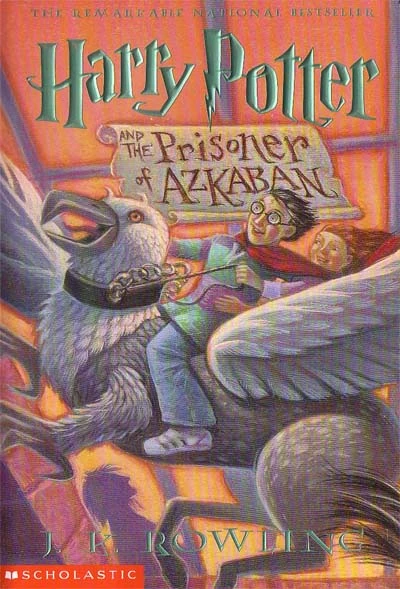
             Harry Potter and the Prisoner of Azkaban by J.K. Rowling is the third instalment to a 7-part fantasy series, following the life of young boy named Harry Potter and his shenanigans with his friends Ron Weasley and Hermione Granger. This book resonates with me for several reasons, because I too was a misfit teenager with what seemed like mountains of issues to deal with while also juggling the everyday routines of adolescence. So much so that over a decade later I still believe this was the best of the 7 books. I know, I know. It wasn't nearly as exciting as the others, but, I connected with Harry's feelings of loneliness, angst and a need for belonging. Today, as a mother, a wife and a teacher, I find that this book was an echo of myself that I can still hear reverberating today.

             First of all, in this book, Harry faces more stress than usual from his "foster" family, i.e., his aunt Petunia, uncle Vernon and cousin Dudley, than he has been facing since book one, The Sorcerer's Stone, when another aunt, Vernon's sister, comes to visit. Essentially, because Harry is a wizard and they are not (therefore they're muggles) they despise him and treat him as a "waste of space" (Rowling 33). The family has hidden this from everyone outside of their home on Privet Drive, and have therefore created an image of Harry as a troubled child with behavioural issues who has to attend a special boarding school for "his sort". Thus upon this aunt Marge's visit, Harry's mistreatment increases tenfold. His teenage angst is also mixed into his dilemma, as he is separated from his magical friends every summer from his actual boarding school, Hogwarts School of Witchcraft and Wizardry, is also woven into his despair, as he bemoans this reality more than ever in the beginning of the story. Similarly, I found that at the cusp of my adolescence, I was filled with angst and a drive for rebellion against never seeming to meet my parents' expectations (which unlike Harry turned out to be driven by my own insecurities more than ever, but that's a story for another time) when it seemed like they would always tell other relatives generic stories about me instead of who I actually was.

             As the novel progresses, Harry's rage is unleashed in magical fury when Aunt Marge, after treating him like a servant all summer, which Harry only endures under threat of having a special privilege of visiting a village in his magical world revoked if he misbehaved, decides to criticize Harry's dead parents. She states that Harry's uncle must never trouble himself about how Harry has turned out because "if there's something wrong with the bitch, there's something wrong with the pup" (Rowling 57).


This excited me more than ever as I felt like I had vicariously rebelled too against everyone who had ever made me feel less than. In a sense, as Harry's anger cause aunt Marge to swell up like a balloon and float away, I felt my own anger float away. I'm a very immersive reader, so much so that when a story ends I feel like a part of me died with it, so at that time, Harry and I were one. We had both defeated the villain of belittlement, but it was only the beginning of Harry's rebellious journey. Overall, the first half of the novel takes Harry on a journey to finding out an escaped convict is out for his head;

Sirius Black, a man who actually was a friend of his parents and ended up being the reason they were killed by the story's true villain, Lord Voldemort. Harry's rebellion takes on the form of ignoring the command to not chase after this killer, because at this point he's tired of being told what to do and tired of being seen as incapable. Later on, I'll discuss how this unfolds! I just have one question, is it exciting enough for you yet?

Sunday, 29 October 2017

Welcome!

Bitmoji Image


Welcome to my blog!


This space is for you to share with each other and to explore the various ways you can learn from an online environment. With all your posts, be respectful and ensure you are sharing meaningful information for your peers.


I look forward to us sharing and learning from each other!